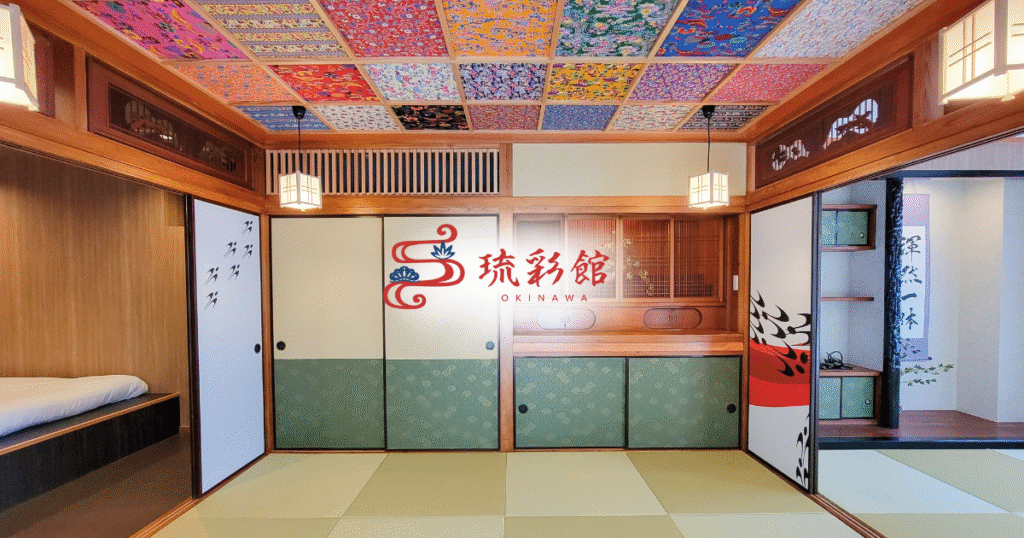
Ein einzigartiger Kunstaufenthalt, bei dem Sie die Farbenpracht und Geschichte Okinawas erleben können. Genießen Sie Ihre ganz persönliche Auszeit inmitten einer dekorativen Schönheit, die an die Ryu-Sa-Dynastie erinnert.
Das Ryusai-kan ist, Als wäre man in die Zeit des Ryūkyū-Königreichs zurückversetzt Als wäre man in der Zeit zurückgereist, Ein Raum, umgeben von farbenfrohen Kunstwerken.
In jedem einzelnen dieser Werke, Die Geschichte und Kultur der Ryūkyū-Inseln Es lebt.
Eingangsbereich
Eingang
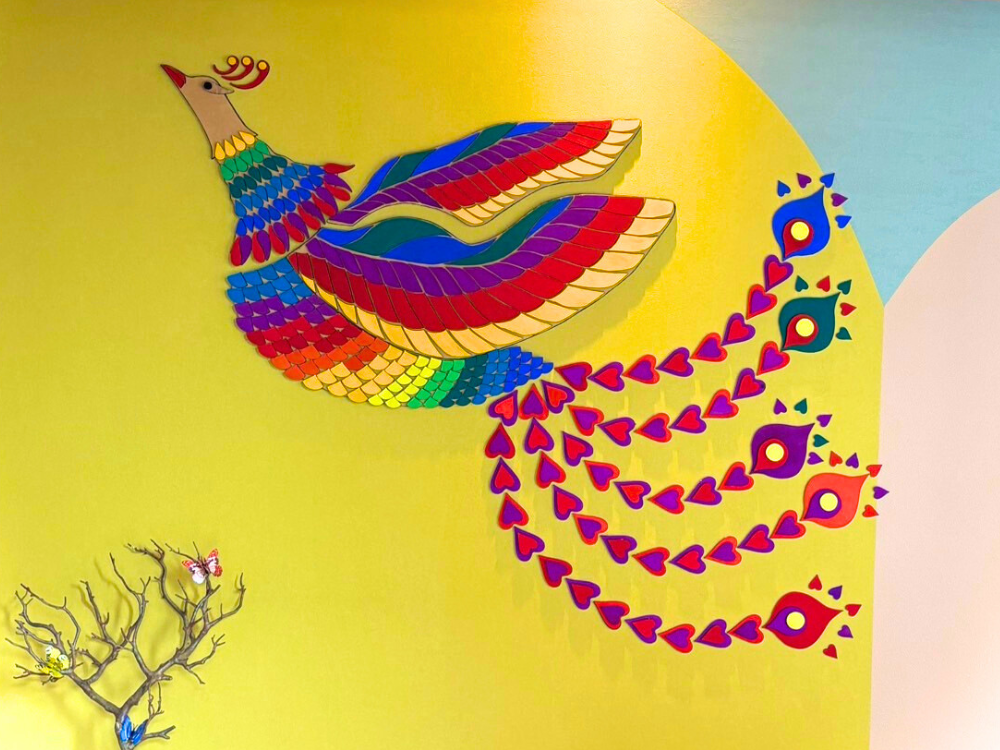
Yushin Hōō yuigokorohouou
Im Ryūkyū-Königreich hatte der Phönix als Glückssymbol eine wichtige Bedeutung und stand für den Schutz des Königs und des Königreichs sowie für Frieden. Insbesondere wurde er in Kunsthandwerksgegenständen wie Bingata-Stoffen und Lackwaren sowie als Symbol der Kikoku-Ōgimi (der höchsten Priesterin) verwendet.
Im Königreich Ryukyu hatte der Phönix als Glückssymbol eine große Bedeutung und stand für den Schutz des Königs und des Königreichs sowie für Frieden. Er war insbesondere in traditionellen Handwerkskünsten wie Bingata-Stoffen und Lackwaren zu finden und diente zudem als Symbol für die Kikoe-ōgimi, die ranghöchste Priesterin.
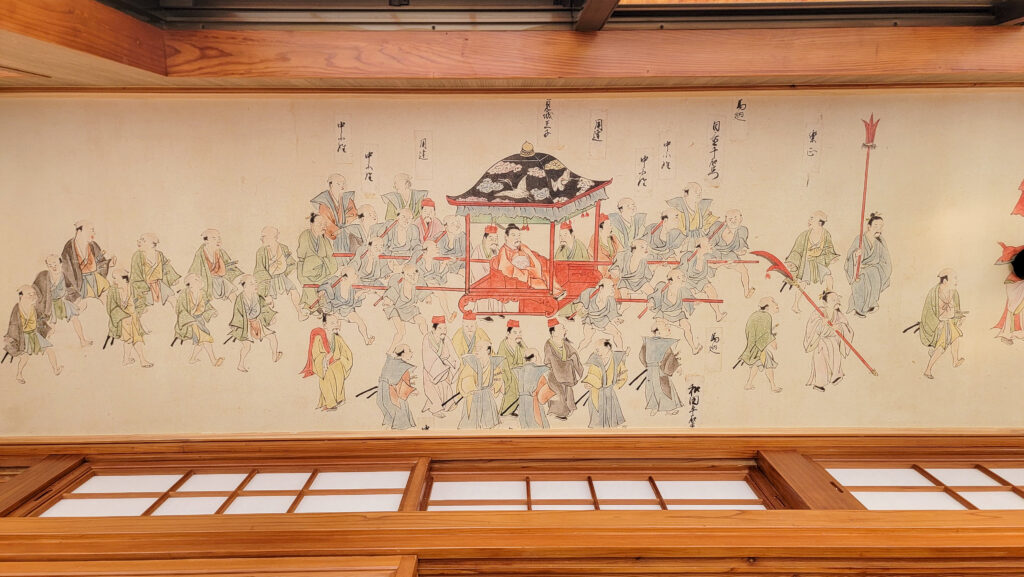
Bildrolle „Edo-Bori“ Edo-Nobori-Bildrolle
Unter der „Reise der Ryūkyū-Gesandtschaft nach Edo“ versteht man die Gesandtschaft, die vom Königreich Ryūkyū zum Edo-Shogunat entsandt wurde.
Als Ryūkyū unter die Herrschaft des Satsuma-Clans fiel, wurde eine Gesandtschaft nach Edo entsandt, um die Thronbesteigung des neuen Shōguns zu feiern und dem neuen König von Ryūkyū für dessen Thronbesteigung zu danken.
Die Gesandtschaft reiste von Ryūkyū über Satsuma und Nagasaki per Schiff durch das Seto-Binnenmeer und über Osaka und Kyōto weiter nach Edo. Die Reise dauerte bis zur Rückkehr etwa ein Jahr; die Strecke betrug auf einer Seite mehr als 2000 km. Es war eine sehr lange Reise, die sowohl auf dem Schiff als auch zu Fuß zurückgelegt wurde, und auf der einige Menschen ihr Leben verloren.
Englisch
The Gesandte aus Ryukyu in Edo (bekannt als “Edo-nobori”) waren diplomatische Gesandtschaften, die vom Königreich Ryukyu an das Edo-Shogunat entsandt wurden.
Nachdem das Königreich Ryukyu unter die Herrschaft des Fürstentums Satsuma gefallen war, entsandte es Gesandte nach Edo, um zum Amtsantritt eines neuen Shoguns zu gratulieren und seine Dankbarkeit für die Anerkennung eines neuen Königs von Ryukyu zum Ausdruck zu bringen.
Die Gesandten reisten von Ryukyu über Satsuma und Nagasaki, segelten dann durch das Seto-Binnenmeer und passierten auf ihrem Weg nach Edo Osaka und Kyoto. Die Reise, die hin und zurück fast ein Jahr dauerte, umfasste über 2.000 Kilometer in eine Richtung und wurde größtenteils mit dem Schiff und zu Fuß zurückgelegt. Einige Mitglieder der Delegation kamen aufgrund der Strapazen der Reise sogar unterwegs ums Leben.
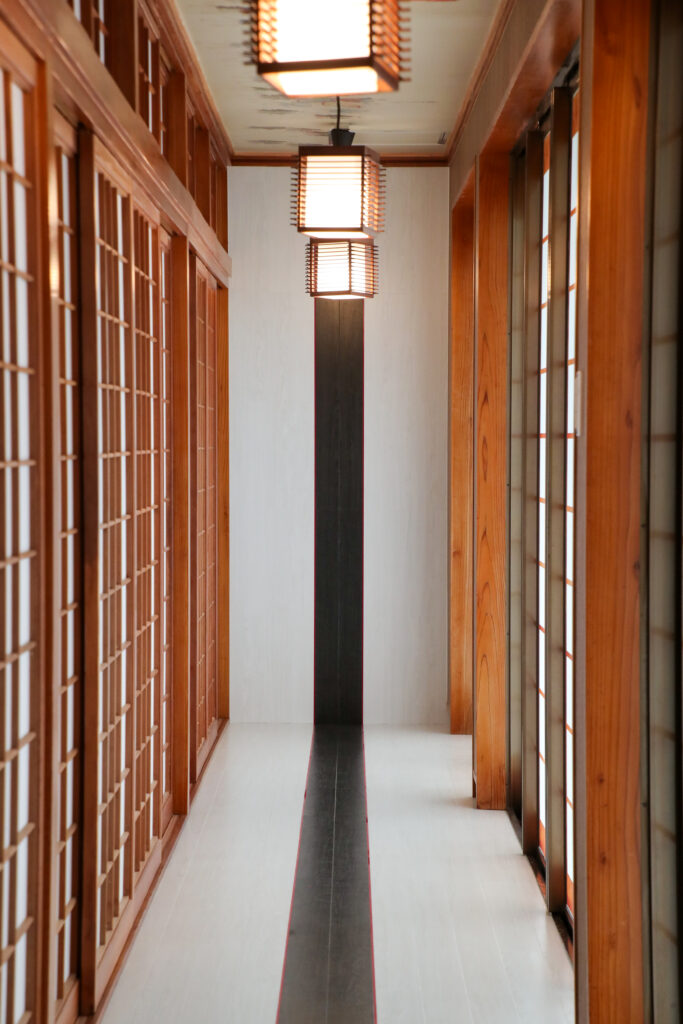
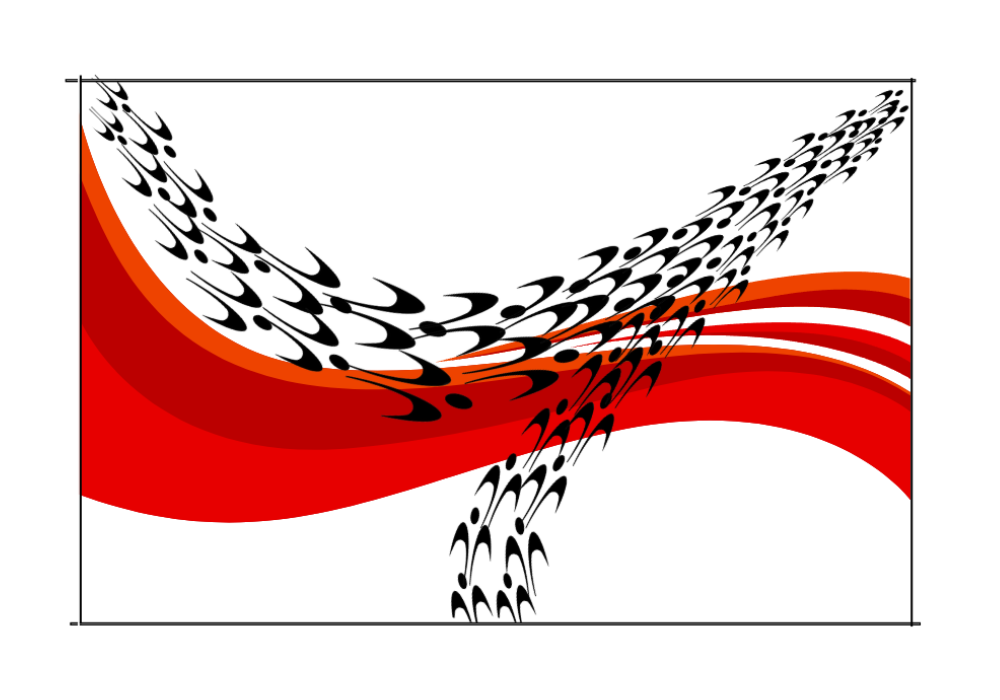
Changhong Tianlu Flur
Für den Boden des Flurs wurden weiße, schwarze und rote Bodenbeläge verwendet, die bis an die Wände hochreichen, sodass der Raum länger wirkt, als er tatsächlich ist. Man lässt seine Gedanken zu der langen, langen Reise der Gesandtschaft schweifen …
Der Boden ist mit weißen, schwarzen und roten Materialien ausgelegt, die nahtlos an die Wände anschließen und so einen optischen Effekt erzeugen, der den Raum länger wirken lässt, als er tatsächlich ist – eine Anspielung auf die lange, beschwerliche Reise der Gesandten aus Ryukyu.
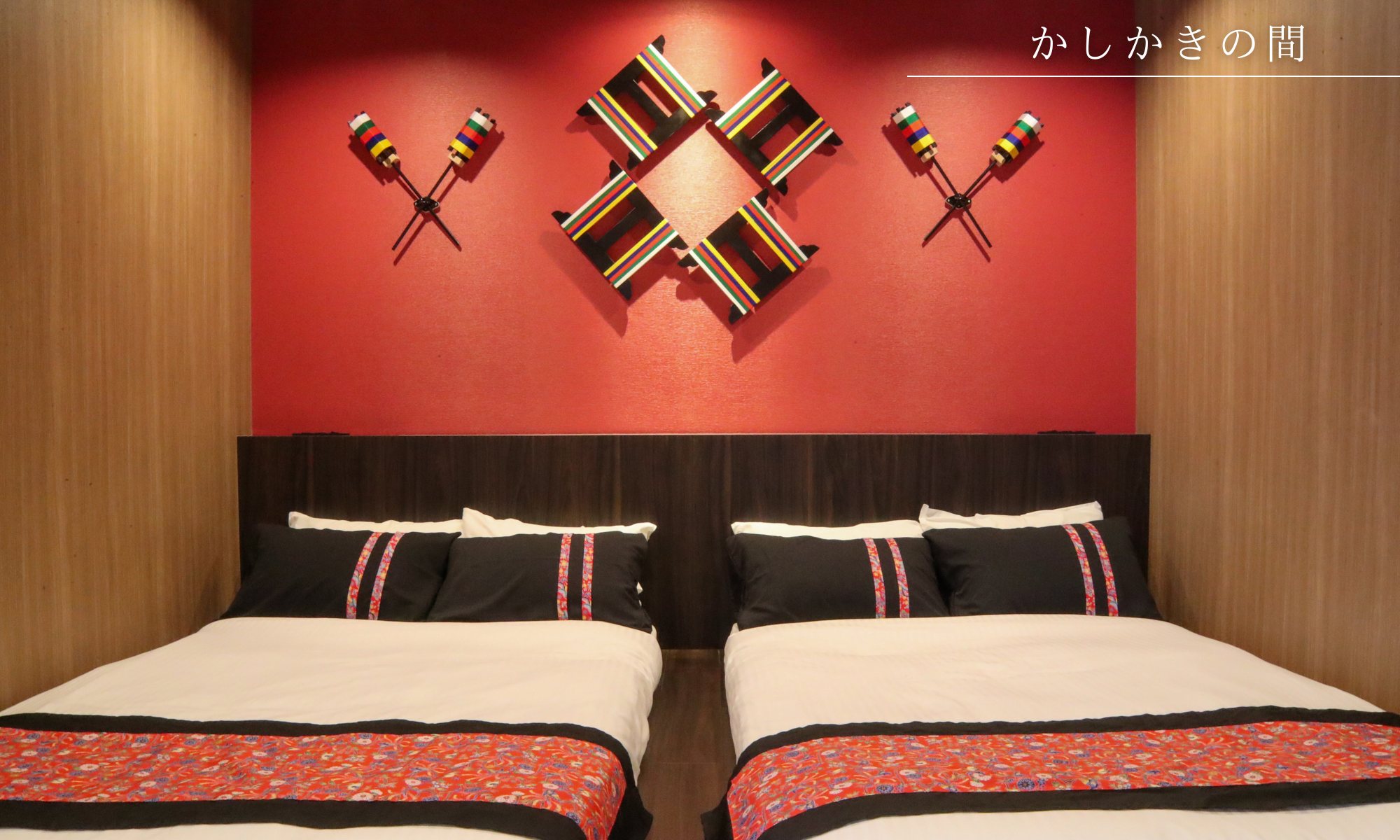
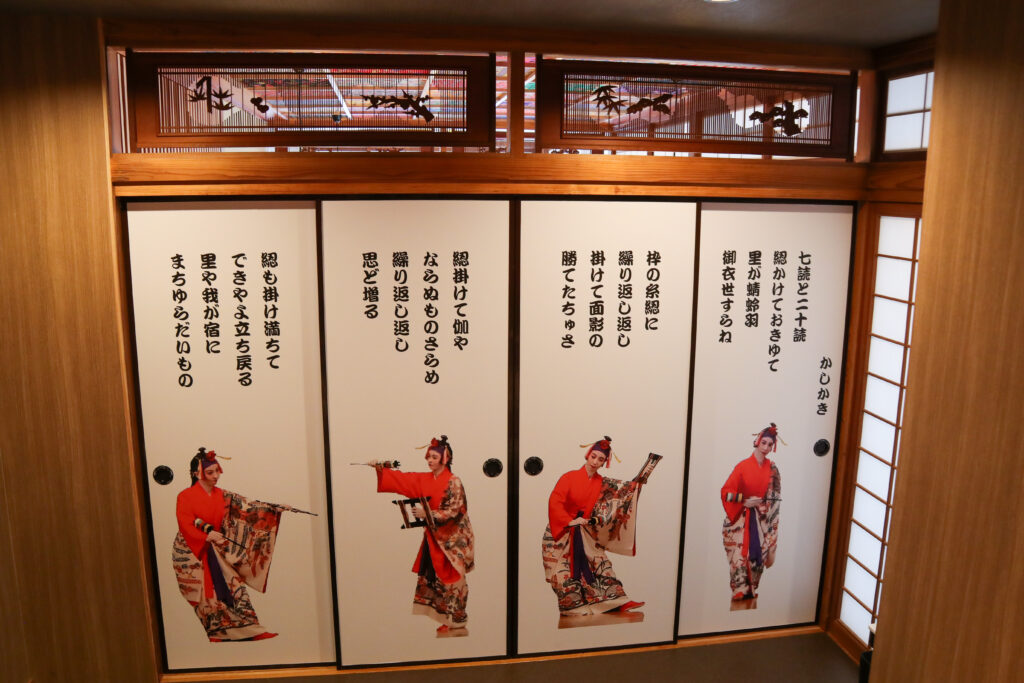
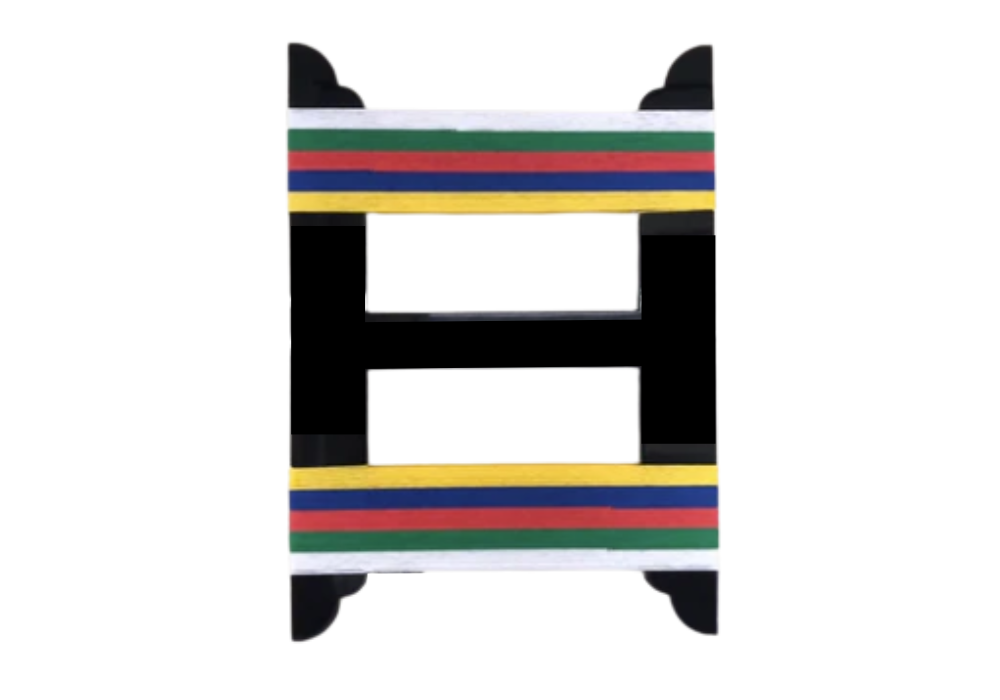
„Kase-kake“ (Wollstrang-Aufhängen) ist ein Stück des klassischen Ryūkyū-Tanzes, das die Gefühle einer Frau zum Ausdruck bringt, die für ihren Geliebten hochwertigen Stoff weben möchte. In diesem Tanz werden die Requisiten „Kase“ und „Rahmen“ verwendet, um die Gefühle einer jungen Frau, die an ihren Geliebten denkt, darzustellen.
Im Dialekt von Okinawa wird es nicht „Kase-kake“, sondern genau genommen „Kashikaki“ gelesen.
*Der klassische Ryūkyū-Tanz ist eine höfische Kunstform, die während der Zeit des Ryūkyū-Königreichs bei Festen zur Bewirtung des Ryūkyū-Königs und der aus China kommenden Gesandten aufgeführt wurde.
Englisch
“Kasekake” (綛掛け) ist der Name eines traditionellen klassischen Tanzes aus den Ryūkyū-Inseln. Er drückt die tief empfundenen Gefühle einer Frau aus, die für ihren Geliebten feinen Stoff weben möchte. Bei der Aufführung verwenden die Tänzer zwei Requisiten – die kase (ein Strangwickler) und ein waku (ein Bild) – um die zarten Gefühle einer jungen, verliebten Frau darzustellen.
Im Dialekt von Okinawa wird es eher “Kashikaki” als “Kasekake” ausgesprochen.”
Anmerkung: Der Begriff „klassischer Ryukyuan-Tanz“ bezieht sich auf die höfischen darstellenden Künste, die während der Zeit des Königreichs Ryukyu entstanden sind. Diese Tänze wurden bei königlichen Banketten aufgeführt, um den König oder chinesische Gesandte zu begrüßen.
Ergänzung
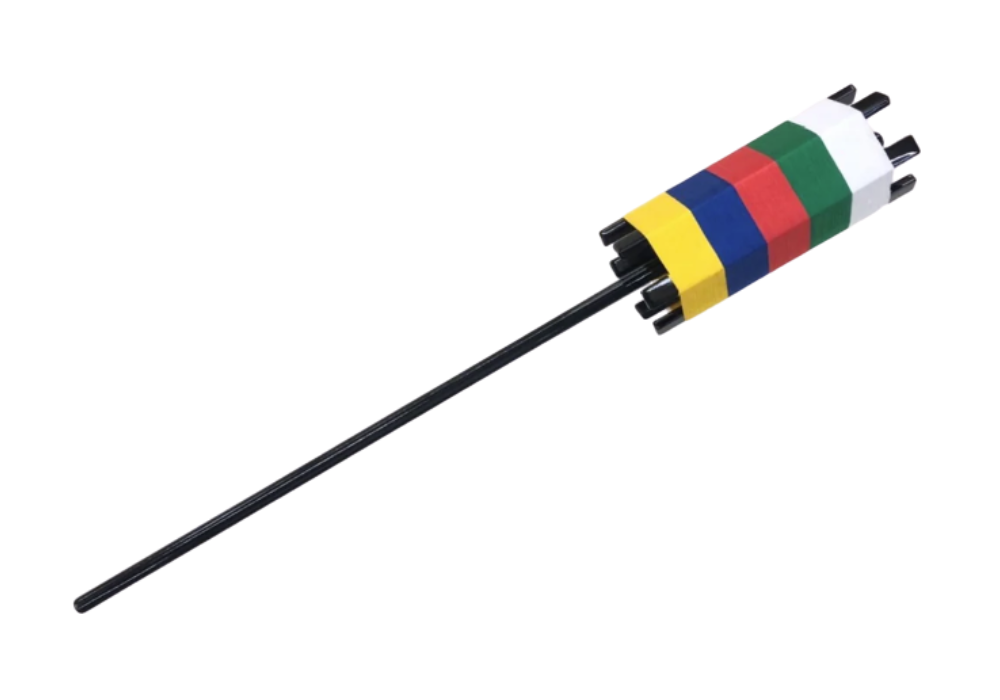
„Kase“ kase Ein Bündel aus Garnen, das beim Spinnen zum Aufwickeln der Garne verwendet wird.
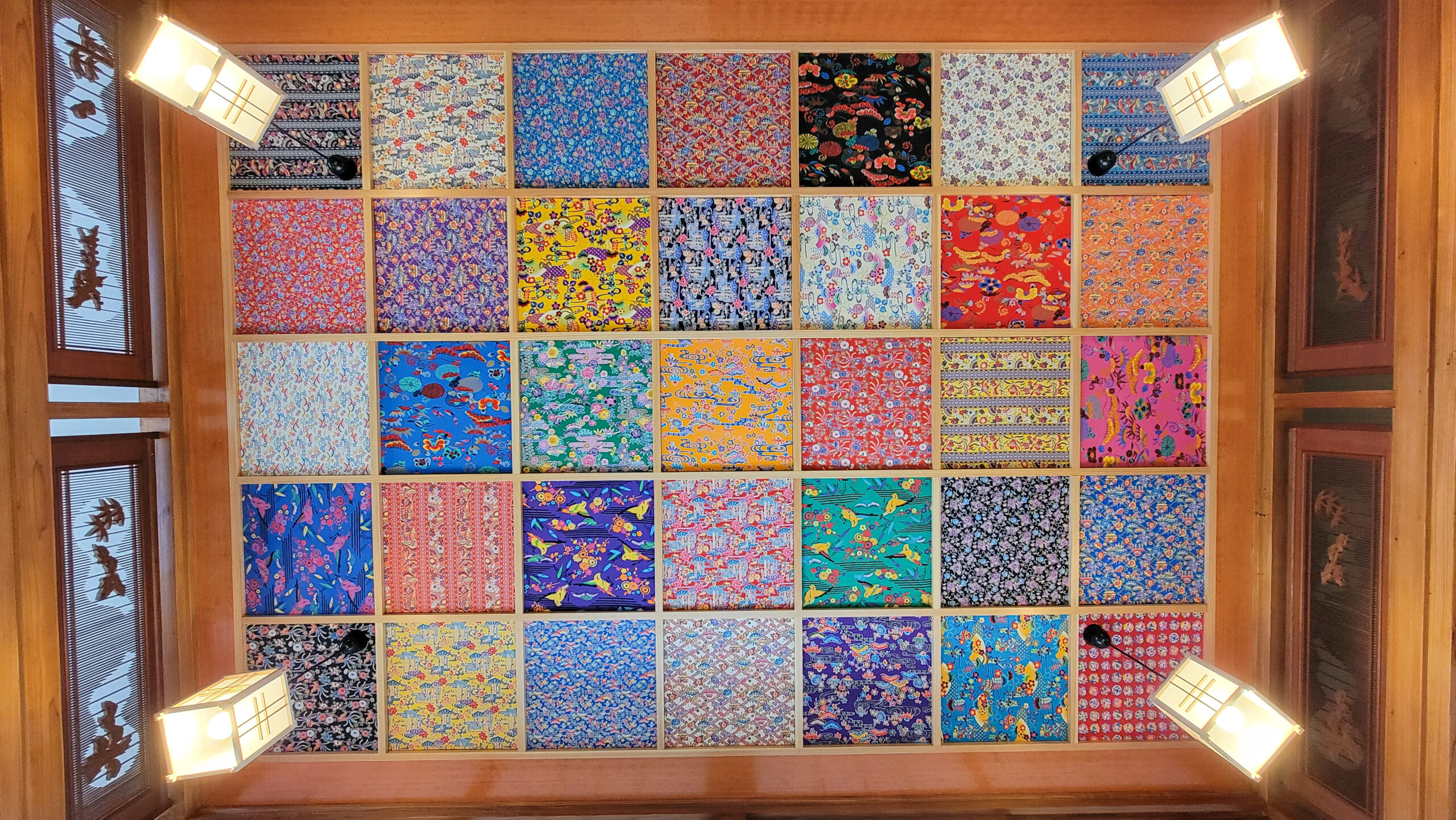
Blumendecke aus 35 Stücken Bingata-Stoff Blumendecke aus Bingata-Stoff
Ryukyu-Bingata ist eine für Okinawa einzigartige traditionelle Färbetechnik, die sich durch leuchtende Farben, kühne Farbkombinationen und kraftvolle, von der Natur inspirierte Muster auszeichnet.
Das „Ben“ in „Bingata“ bezieht sich nicht nur auf die Farbe Rot, sondern auf Farben im Allgemeinen, während „Gata“ für Muster steht. In der Zeit des Königreichs Ryukyu entwickelte sich diese Kunst durch den Handel mit China und Südostasien unter dem Einfluss verschiedener Färbe- und Webtechniken sowie Designs weiter und wurde als Kleidung der Königsfamilie und des Adels geschätzt.
Bei den Mustern des Ryukyu-Bingata gibt es je nach sozialer Schicht und Verwendungszweck verschiedene Arten, beispielsweise für Könige und Adlige, für hochrangige Samurai, für Samurai sowie für das einfache Volk.
Englisch
Ryukyu-Bingata ist eine traditionelle Färbetechnik, die es nur auf Okinawa gibt und die für ihre leuchtenden Farben, krassen Kontraste und ausdrucksstarken Muster bekannt ist, die oft von der Natur inspiriert sind.
Das Wort “Bingata” stammt aus “bin” (das für Farbe steht, nicht nur für Rot) und “gata” (Muster). Diese Kunstform entwickelte sich während der Zeit des Königreichs Ryukyu unter dem Einfluss von Färbe- und Webtechniken aus China und Südostasien, die über den Handel Einzug hielten. Im Laufe der Zeit wurde sie zu einem geschätzten Stoff, der für die Kleidung des Königshauses und des Adels verwendet wurde.
Die Bingata-Muster variierten je nach sozialer Schicht und Verwendungszweck, wobei es unterschiedliche Stile für Mitglieder des Königshauses, hochrangige Beamte, Angehörige der Samurai-Klasse und das einfache Volk gab.
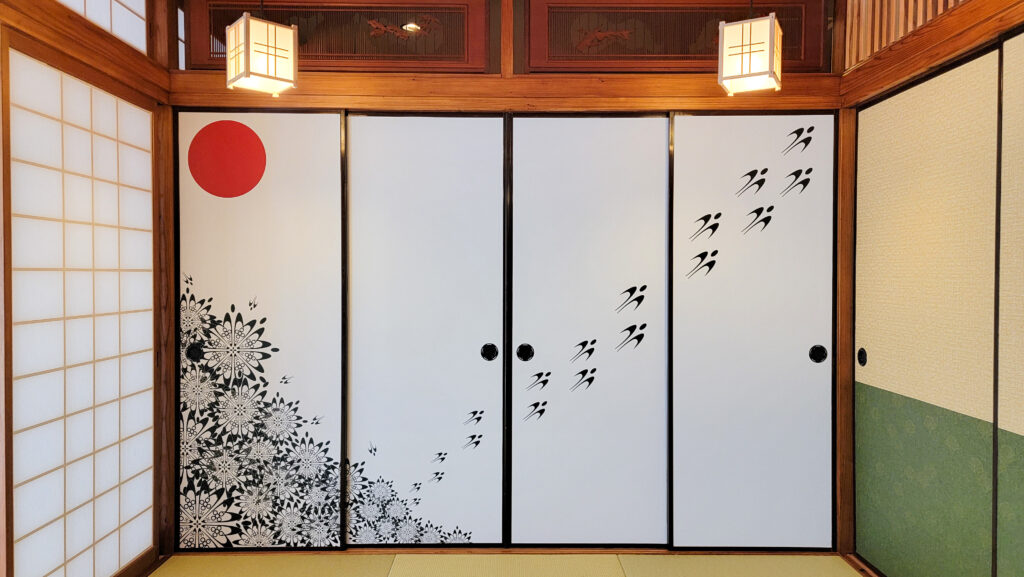
Fusuma mit Ryukyu-Kasuri-Muster Schiebetüren im Ryukyu-Kasuri-Design
Ryukyu-Kasuri ist ein Seidenstoff, dessen Hauptmerkmal die Vielfalt der Muster ist, von denen es etwa 600 verschiedene gibt. Die Muster basieren auf Motiven aus dem Alltag, wie beispielsweise Alltagsgegenständen und Pflanzen.
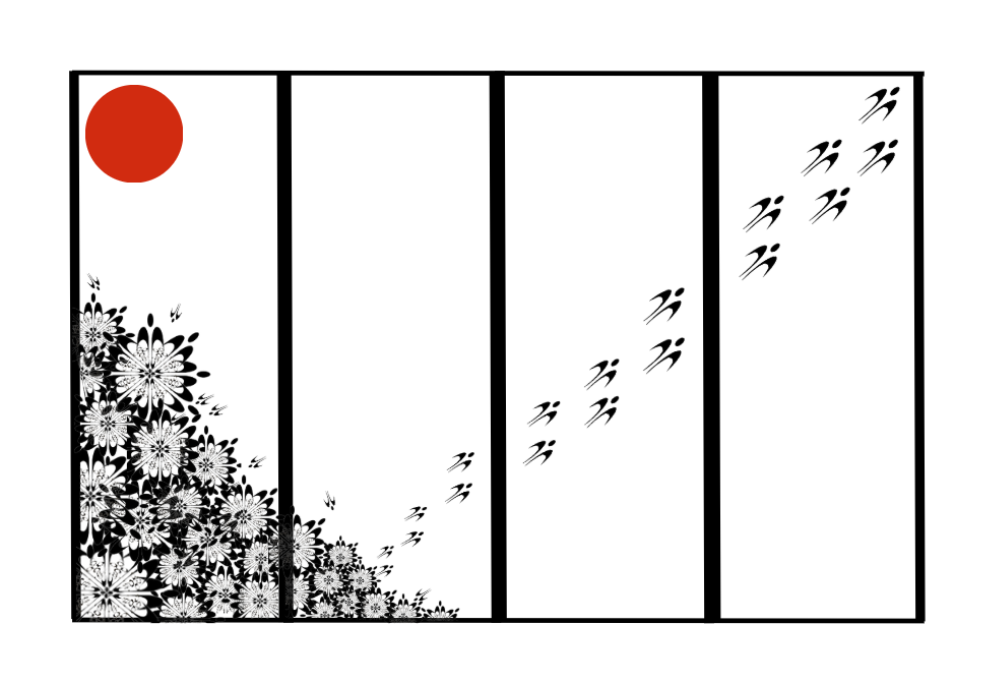
Auch die Fusuma-Türen im Ryusai-kan sind mit Blumenmustern verziert, die aus den traditionellen Kasuri-Motiven „Vogel“ und „fünf runde Wolken“ kombiniert sind.
Englisch
Ryukyu-Kasuri ist eine Art Seidenstoff, der sich durch seine vielfältigen Muster auszeichnet – über 600 verschiedene Designs. Diese Muster sind von vertrauten Alltagsgegenständen, Pflanzen und Elementen des täglichen Lebens inspiriert.
Im Ryusaikan sind die Schiebetüren (Fusuma) weisen ein Blumenmuster auf, das traditionelle Elemente kombiniert Kasuri Motive wie Vögel und das Fünfkreiswolke (Fünf runde Wolken), die die Schönheit der Handwerkskunst der Ryūkyū-Inseln zur Geltung bringen.
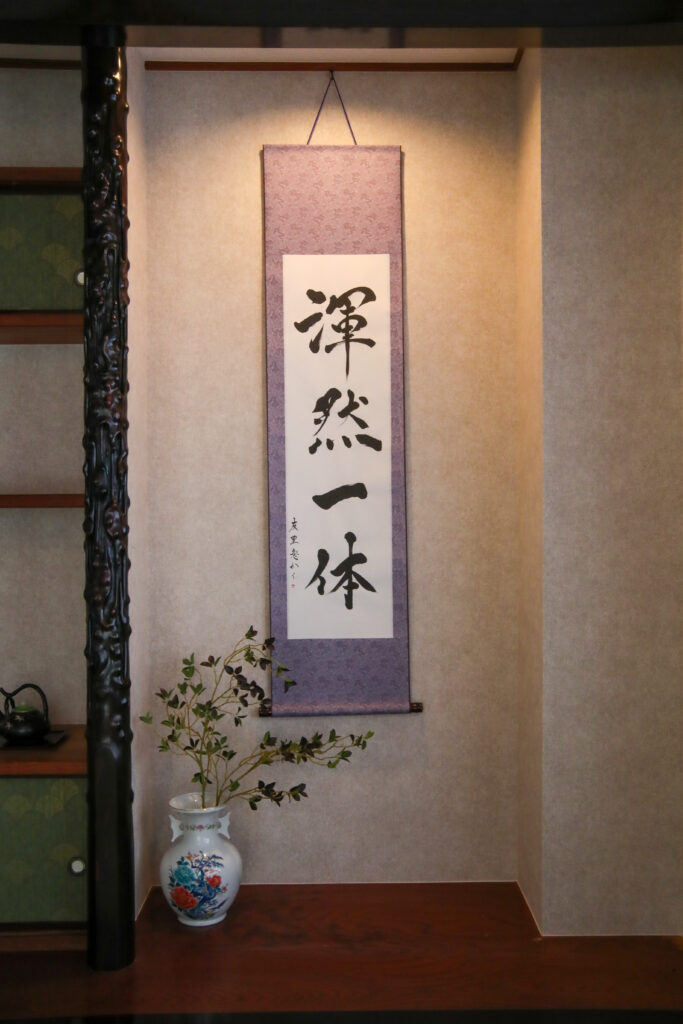
„Konzen Ittai“ bezeichnet den Zustand, in dem sich verschiedene Dinge miteinander vermischen und zu einem Ganzen verschmelzen.
Okinawa hat Elemente aus den Kulturen verschiedener Länder wie Indonesien, China, Japan und den USA aufgenommen und daraus eine eigene Kultur entwickelt.
Ich habe diesen Ausdruck gewählt, weil ich ihn für besonders geeignet halte, um die Kultur Okinawas zu veranschaulichen. Außerdem passt er perfekt zu diesem Ryusai-kan, das von Projektmitgliedern aus der Präfektur und darüber hinaus gemeinsam geschaffen wurde.
Englisch
“Konzen Ittai” ist ein japanischer Ausdruck, der bedeutet: “Unterschiedliche Elemente, die sich nahtlos zu einem einheitlichen Ganzen verbinden.”
Okinawa hat eine ganz eigene Kultur entwickelt, indem es Einflüsse aus verschiedenen Ländern, darunter Indonesien, China, Japan und die Vereinigten Staaten, aufgenommen hat. Ich habe diesen Satz gewählt, weil er das Wesen der Kultur Okinawas perfekt auf den Punkt bringt.
Es spiegelt auch auf wunderbare Weise den Geist von Ryusaikan, ein Ort, der durch die Zusammenarbeit von Projektmitgliedern aus der Präfektur und von außerhalb zum Leben erweckt wurde.
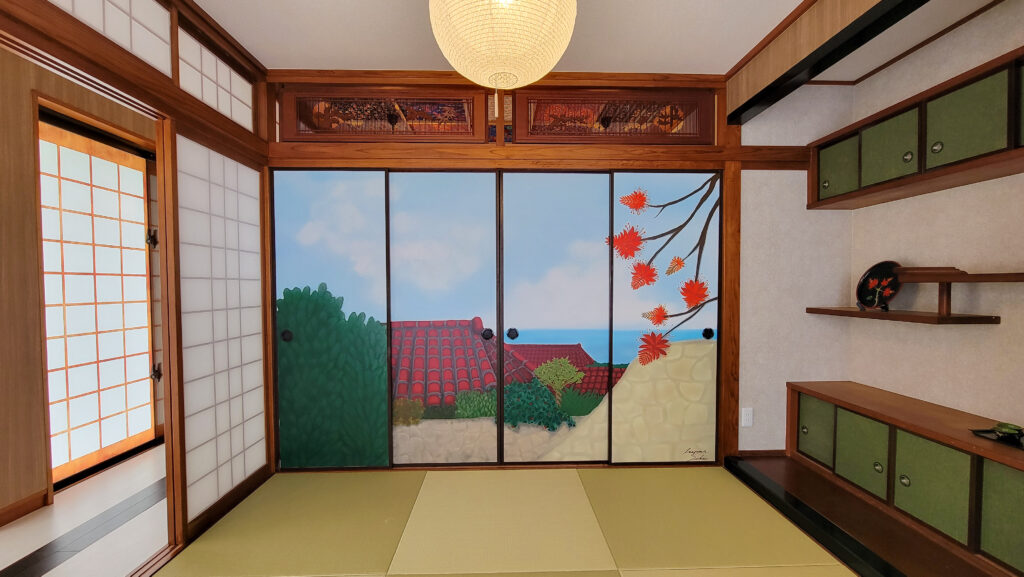
Fusuma mit Landschaftsmotiven Landschaftsmalerei
Die Schiebetüren zeigen Landschaftsmotive aus Okinawa. Die großen Fukugi-Bäume, die das Anwesen umgeben, das blaue Meer, das zwischen den Reihen roter Dachziegel hindurchschimmert, und das Rot der Deigo-Blüten, das sich vom klaren Himmel abhebt. Wir haben diese nostalgischen Landschaften aus Okinawa gemalt, als Druck aufgebracht und zu Schiebetüren verarbeitet.
Englisch
The Fusuma (Schiebetüren) zeigen ein Landschaftsgemälde von Okinawa. Sie zeigen nostalgische Szenen wie zum Beispiel große fukugi Bäume, die ein traditionelles Haus umgeben, Einblicke in die blaues Meer durch Reihen von rote Ziegeldächer, und die lebhaften rote Blüten des Deigo Bäume, die sich vor dem klaren, erfrischenden Himmel abheben. Diese liebgewonnenen Landschaften aus Okinawa wurden in einem Originalgemälde festgehalten, das anschließend gedruckt und zu dem Fusuma.
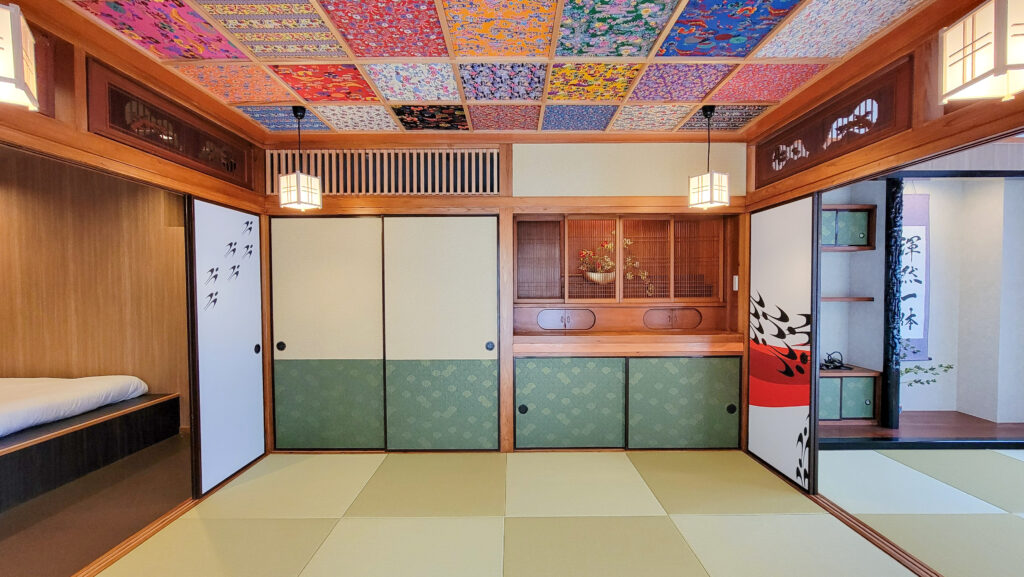
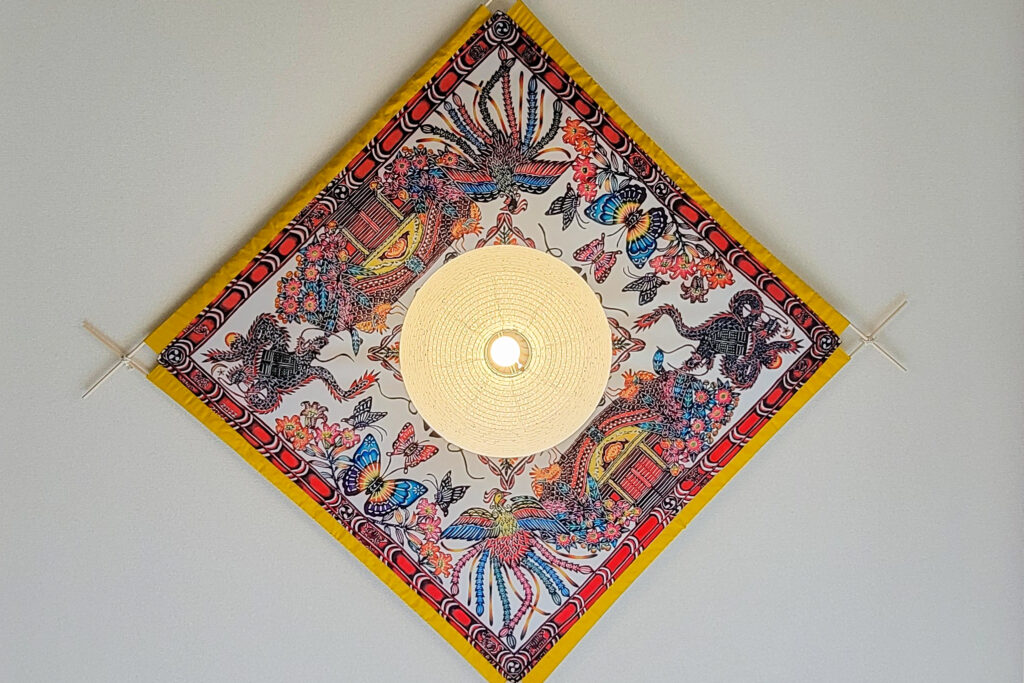
Das Furoshiki an der Decke Furoshiki
Ein Furoshiki, entworfen von der Modedesignerin YoKang aus Okinawa. Darauf sind Motive abgebildet, die für Okinawa symbolisch sind, darunter die Burg Shuri, ein Drache, ein Phönix, der Deigo-Baum und rote Dachziegel.
Englisch
Dies Furoshiki (Wickeltuch) wurde von einem Modedesigner aus Okinawa entworfen YoKang. Es zeigt typische Motive aus Okinawa wie beispielsweise Burg Shurijo, Drachen, Phönixe, deigo flowers, und rote Ziegeldächer, wunderschön zu einem lebendigen und symbolträchtigen Muster verwoben.
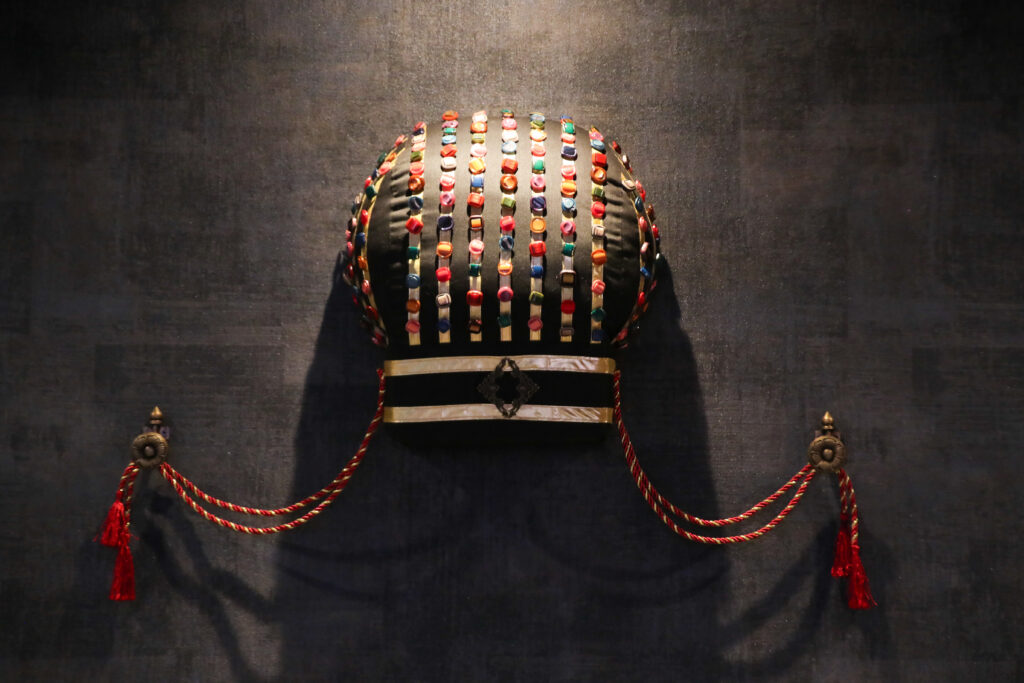
Die Krone ist mit sieben verschiedenen Schmucksteinen wie Gold, Silber und Korallen verziert, die die Autorität des Königs symbolisieren. Es handelt sich um ein einzigartiges Werk aus Ryukyu, bei dem nach der Schenkung ein „Drachen“-Motiv – Symbol des Königsthrons – in die goldene Haarnadel eingraviert wurde, was die hohe handwerkliche Kunstfertigkeit der damaligen Handwerker verdeutlicht.
*Die Krone an der Wand des Ryusai-kan wurde durch die Anordnung von Knöpfen unterschiedlicher Größe und Gestaltung so gestaltet, dass sie niedlich wirkt und ein Gefühl der Vertrautheit vermittelt.
Englisch
Die Königskrone war mit sieben verschiedenen Arten von Zierperlen aus Gold, Silber, Koralle und anderen Materialien verziert, die die Autorität des Königs symbolisieren sollten. Nach der Überreichung wurde eine goldene Haarnadel mit einem Drachenmotiv, das die königliche Macht symbolisiert – ein ursprüngliches Design aus den Ryūkyū-Inseln, das die außergewöhnliche Handwerkskunst jener Zeit widerspiegelt.
*Die Krone, die an der Wand in Ryusaikan ist eine reizvolle Neuinterpretation, die durch die Verwendung von Knöpfen in verschiedenen Größen und Stilen zugänglicher wirkt und einen verspielten und freundlichen Eindruck vermittelt.
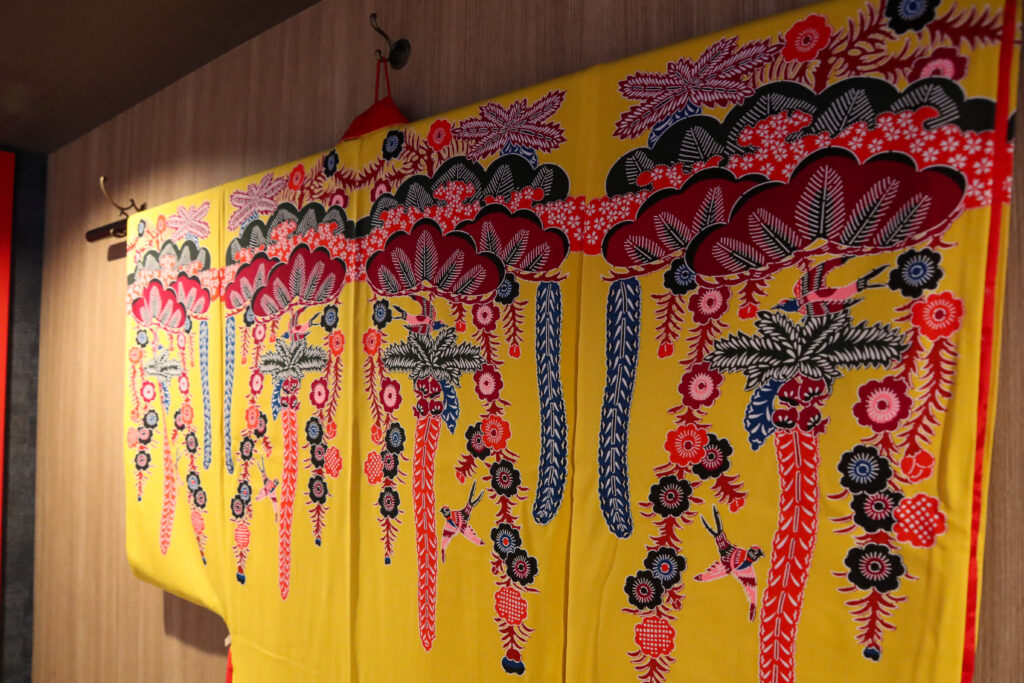
Bingata-Kostüm Bingata-Tracht
Eine elegante, gelbe Bingata-Tracht, die ausschließlich der königlichen Familie vorbehalten war. Ebenfalls ausgestellt sind die leuchtenden Bingata-Gewänder, die als Symbol für Ryukyu gelten. Es handelt sich um die zeremonielle Kleidung, die von jungen Mitgliedern der königlichen Familie getragen wurde.
Englisch
Zu sehen ist eine formelle gelbes Bingata-Gewand, eine prestigeträchtige Farbe, die ausschließlich der königlichen Familie vorbehalten war. Dieses farbenfrohe Kleidungsstück, das als Symbol für das Königreich Ryukyu gilt, wurde von jungen Mitgliedern des Königshauses als Teil ihrer offiziellen Kleidung getragen.
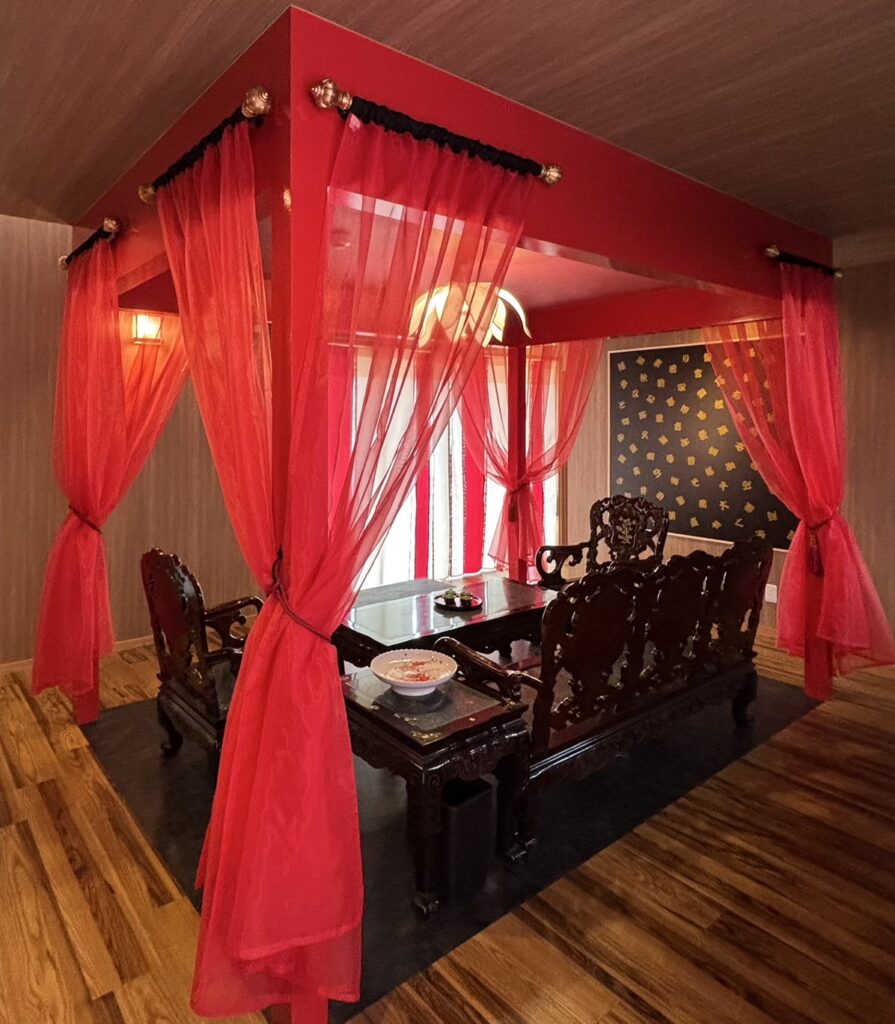
Da ich einen Speisesaal im Stil des Shuri-Schlosses mit starkem chinesischem Einfluss gestalten wollte, habe ich einen tiefroten Pavillon errichtet und dort chinesische Möbel aufgestellt, deren Tischplatten und Sitzflächen mit Marmor verkleidet sind.
Durch die Verwendung desselben tiefroten Baldachins entsteht zudem ein geschützter Raum, der ein Gefühl der Geborgenheit vermittelt.
Englisch
Inspiriert vom starken chinesischen Einfluss von Burg Shurijo, haben wir einen Essbereich in einem tiefen Purpurrot gestaltet Pavillon als dessen Schwerpunkt. Möbel im chinesischen Stil mit Tischplatten und Sitzflächen aus Marmor wurde darin platziert, was die elegante Atmosphäre noch unterstrich.
Eine Übereinstimmung purpurroter Baldachin wurde oben hinzugefügt, wodurch ein Gefühl von Intimität und Behaglichkeit entsteht – ein geschlossener Raum, der zugleich majestätisch und einladend wirkt.
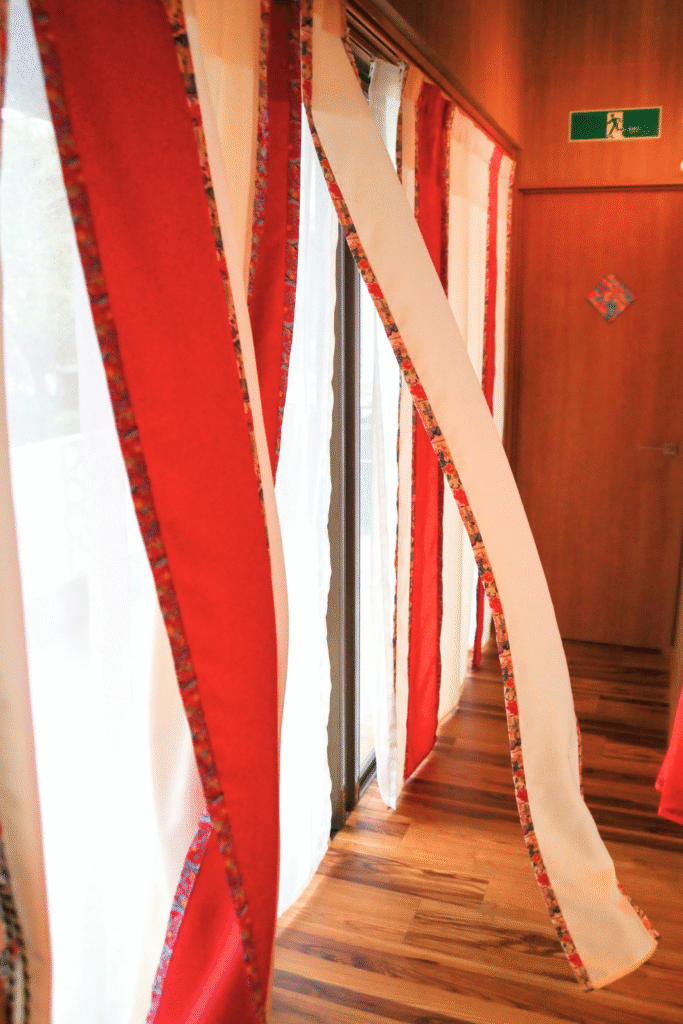
Vorhänge im Kichō-Stil Vorhang
Kichō sind traditionelle japanische Einrichtungsgegenstände, die für verschiedene Zwecke wie Raumteiler, Sichtschutz oder Windschutz verwendet wurden.
Diese Vorhänge sind im Kichō-Stil gefertigt. Da sie im oberen Bereich miteinander verbunden sind, lassen sie sich wie Vorhänge öffnen und schließen. Jeder einzelne Vorhang ist mit einer Bingata-Paspel verziert, wodurch ein Hauch von Okinawa-Flair entsteht. Durch die unterschiedlichen Breiten der roten und weißen Stoffbahnen entsteht ein anderer Rhythmus als bei den üblichen rot-weißen Vorhängen.
Englisch
“Kicho” ist ein traditioneller japanischer Paravent, der früher als Raumteiler, Sichtschutz oder Windschutz diente.
Dieser Vorhang wurde im Stil eines kicho. Der obere Teil ist verbunden, sodass er sich wie ein moderner Vorhang öffnen und schließen lässt. Jedes Paneel wird durch Bingata-Paspelierung, was dem Ganzen eine ganz eigene okinawanische Note verleiht. Durch die bewusste Variation der Breite der roten und weißen Stoffbahnen erzeugt das Design einen rhythmischen visuellen Fluss, der es von herkömmlichen rot-weißen zeremoniellen Vorhängen abhebt.
Design-Stoff Design-Stoff
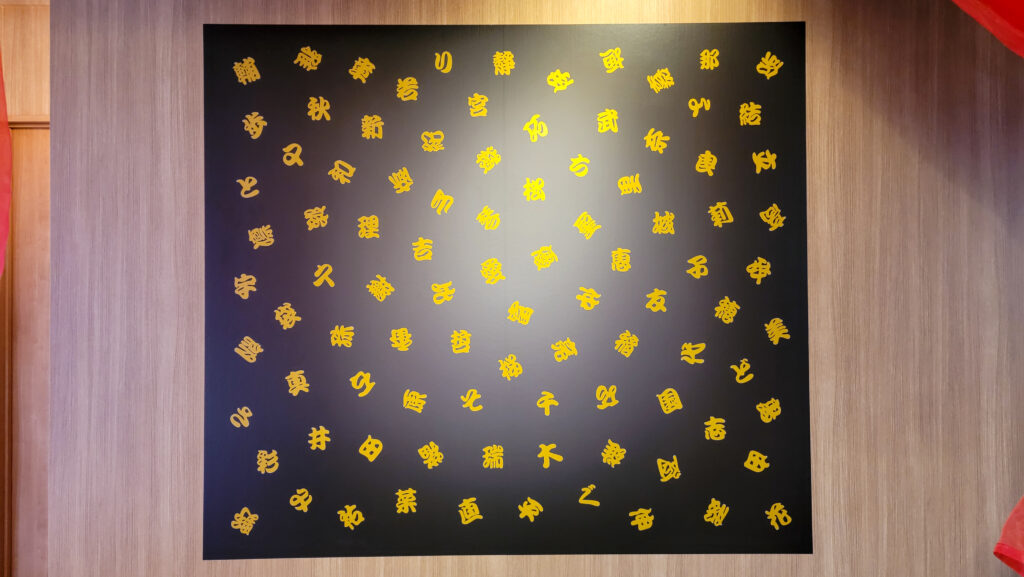
Eine Wanddekoration, bei der die Vor- und Nachnamen der Mitglieder des „Projekts zur Wiederbelebung alter Häuser“, aus dem das Ryusai-kan hervorgegangen ist, sowie der Bauleiter einzeln verteilt und eingestreut wurden.
Englisch
Diese Wanddekoration zeigt das Namen der Mitglieder und Bauleiter, die an der Erstellung von Ryusaikan, entstanden aus dem Projekt zur Restaurierung eines traditionellen Hauses. Jeder Vor- und Nachname wurde getrennt und verstreut im gesamten Design, als Symbol für die vielen Hände und Herzen, die gemeinsam dazu beigetragen haben, diesen Raum zum Leben zu erwecken.
von Raumgestalter Design SP41, Geschäftsführerin Seiko Inayama